For aesthetics practitioners

MTD for Income Tax for aesthetics practitioners.

High-value treatments, product stock to buy in, clinic room rent, insurance and training. Here's how Making Tax Digital for Income Tax applies to aesthetics practitioners, and when it starts for you.

Does this apply to me?

Busy aesthetics clinics are largely in scope now.

MTD for Income Tax is measured on gross self-employed income before expenses. With high-value treatments, a full diary passes £50,000 quickly.

Live now
£50,000
Gross income from April 2026
£30,000
Threshold from April 2027
£20,000
Threshold from April 2028
Price paid vs profit

The full treatment price is your income.

The price a client pays is your gross income, even though a chunk of it is the product you bought in. Recording your stock as an expense is what keeps your tax based on the profit, not the headline treatment price.

What records you need
What's changing

Digital records, four quarterly updates, one final declaration.

Your annual Self Assessment return is replaced by four short quarterly updates and a year-end final declaration, all through recognised software.

Expenses to keep digital

  • Product and stock for treatments
  • Clinic or room rent
  • Insurance for your treatments
  • Training and certification
  • Equipment and consumables
  • Booking and card-payment fees

Record stock purchases against your treatment income so your margin, not just your turnover, is clear each quarter.

  • Product stock Expense against treatment income
  • Room rent A deductible business cost
  • Insurance and training Recorded as business expenses
The clinic detail

The bits specific to aesthetics.

Product stock

High-value products bought in are a real cost. Recorded against treatments, they keep your margin clear.

Room rent

Renting a clinic room or chair is deductible. Record it against your income so your figures show the real margin.

Insurance and training

Treatment insurance and ongoing training are business costs. Keep them recorded so nothing is missed at year-end.

Card and booking fees

Payment and booking-platform fees are deductible. Snap or import them so your expenses stay complete.

Why Clear Books

See the profit behind the price.

When product costs are a big part of every treatment, the margin matters. Clear Books keeps income and stock matched and gives HMRC exactly what MTD requires.
  • Record treatment income and product stock together
  • Track room rent, insurance and training
  • Snap supplier receipts on the app
  • Send HMRC-compliant quarterly updates in minutes
  • See the real margin on every treatment
  • Free plan available, no timer
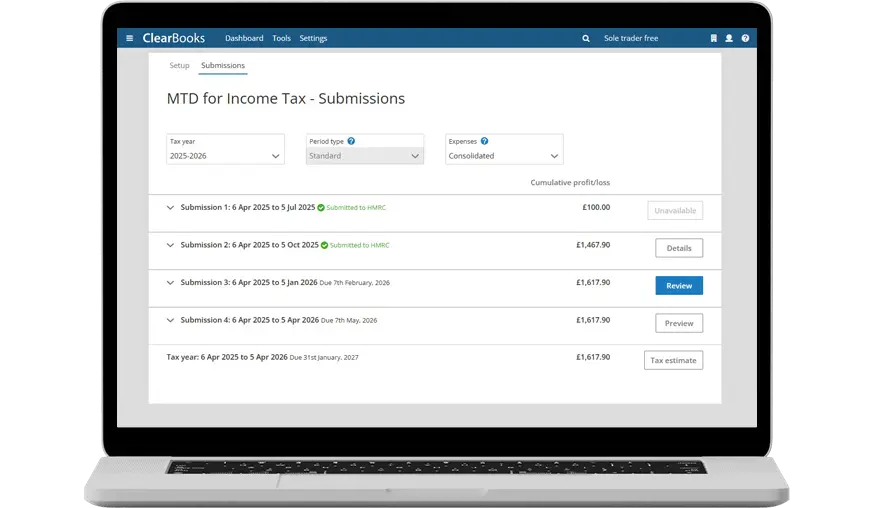
The Clear Books MTD for Income Tax submissions screen showing four quarterly updates submitted to HMRC
Q1 update submitted
HMRC recognised
Common questions

Aesthetics practitioner MTD FAQ.

Do aesthetics practitioners have to use MTD for Income Tax?
If your self-employed income is over £50,000, it applies from 6 April 2026. Many aesthetics practitioners are above that. The threshold drops to £30,000 from April 2027 and £20,000 from April 2028.
How do I record product and stock costs?
The products you buy in for treatments are a business expense. Recording your stock against your treatment income means you're taxed on the profit, not the full price a client pays.
Can I claim clinic or room rent?
Yes. If you rent a clinic room or space, the rent is a deductible business expense you record digitally with your other costs.
Is my training and insurance deductible?
Insurance for your treatments and ongoing training relevant to your work are generally deductible. Keep them recorded so your expense total is complete at year-end.
I work from more than one location, does that matter?
No. Clinic, rented room or mobile visits, it's all one set of self-employed records that totals into a single quarterly update.
Free for self-employed aesthetics practitioners

See the profit behind every treatment.

Record treatments and stock as you go, and send your first quarterly update in minutes.