For self-employed instructors

MTD for Income Tax for HGV / LGV instructors.

High day rates for corporate and fleet training, an expensive training vehicle, DVSA fees and B2B invoicing. Here's how Making Tax Digital for Income Tax applies to HGV and LGV instructors, and when it starts.

Does this apply to me?

On these day rates, you're in scope now.

MTD for Income Tax is measured on gross income before costs. On typical corporate and fleet training rates, most instructors are over £50,000.

Live now
£50,000
Gross income from April 2026
£30,000
Threshold from April 2027
£20,000
Threshold from April 2028
Mostly B2B

Invoiced work, not cash in hand.

Most instructor income is invoiced to fleets and training providers, so your records are naturally tidy. MTD is simply about reporting those invoices and your costs each quarter instead of once a year.

What records you need
What's changing

Digital records, four quarterly updates, one final declaration.

Your annual Self Assessment return is replaced by four short quarterly updates and a year-end final declaration, all through recognised software.

What to keep digital

  • Invoices to fleets and training providers
  • Training vehicle, as a capital asset
  • Fuel and running costs
  • DVSA and registration fees
  • Insurance and breakdown cover
  • Professional membership and admin

Record the training vehicle separately so capital allowances, not a one-off expense, are applied.

  • B2B invoices Income recorded as you bill
  • Training vehicle Capital asset and allowances
  • DVSA fees Deductible business costs
The instructor detail

The bits specific to HGV instruction.

Training vehicle as capital

An expensive asset claimed through capital allowances. Record the finance so the right allowance applies at year-end.

B2B invoicing

Most work is invoiced to fleets and training firms. Record each invoice and it totals into your quarterly update.

DVSA and insurance

DVSA fees, registration and specialist insurance are deductible. Keep them recorded so nothing is missed.

Fuel and running costs

Fuel and maintenance on a big training vehicle add up. Snap the receipts so your profit is realistic.

Why Clear Books

Invoices in, quarterly update out.

Your work is already invoiced, so the records almost keep themselves. Clear Books brings them together and gives HMRC exactly what MTD requires.
  • Raise and record invoices to fleets and providers
  • Record the training vehicle for capital allowances
  • Keep DVSA fees and insurance recorded
  • Snap fuel and maintenance receipts
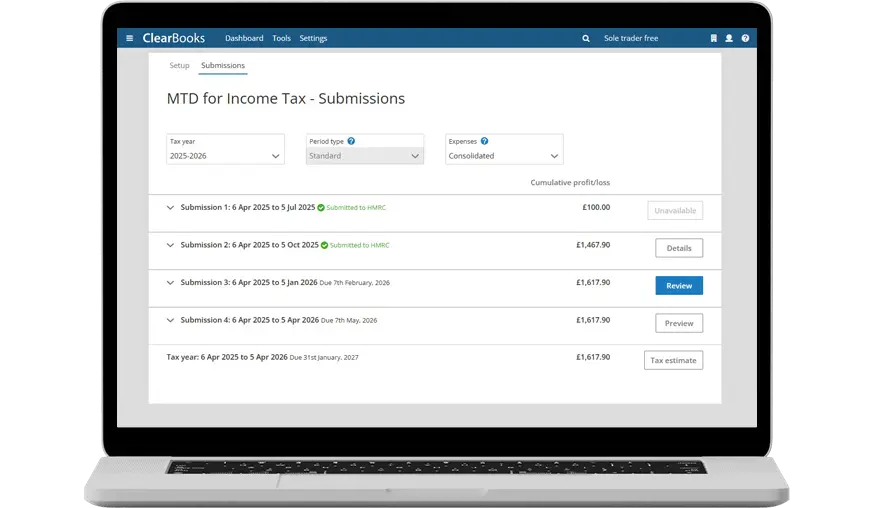
  • Send HMRC-compliant quarterly updates in minutes
  • Free plan available, no timer
The Clear Books MTD for Income Tax submissions screen showing four quarterly updates submitted to HMRC
Q1 update submitted
HMRC recognised
Common questions

HGV instructor MTD FAQ.

Do HGV and LGV instructors have to use MTD for Income Tax?
On typical day rates, most instructors are over £50,000 gross, so it applies from 6 April 2026. The threshold drops to £30,000 from April 2027 and £20,000 from April 2028.
How do I treat my training vehicle?
A training lorry is a major capital asset, usually claimed through capital allowances, with fuel and running costs recorded separately. Record the purchase or finance so the right allowances can be applied.
Are DVSA and registration fees deductible?
Yes. DVSA fees, registration and any assessment or CPC-related costs for your work are deductible business expenses you record digitally.
I invoice fleets and training firms, how does that work?
Most instructor income is B2B, invoiced rather than cash. You record each invoice as income, and Clear Books totals them into your quarterly update.
What else can I claim?
Typical costs include the training vehicle and fuel, insurance, DVSA fees, professional membership and any premises or admin costs.
Free for self-employed instructors

Keep your invoices and costs in order.

Record your training work and vehicle costs as you go, and send your first quarterly update in minutes.