For HVAC & air-con engineers

MTD for Income Tax for HVAC & air-con engineers.

F-Gas certification, recurring commercial service contracts, big install materials and a summer demand spike. Here's how Making Tax Digital for Income Tax applies to HVAC and air-con engineers, and when it starts.

Does this apply to me?

If you turn over more than £50,000, it applies now.

MTD for Income Tax is measured on gross income before expenses. Install materials and recurring contracts add up, so most air-con engineers are well over the line.

Live now
£50,000
Gross income from April 2026
£30,000
Threshold from April 2027
£20,000
Threshold from April 2028
Contracts plus installs

Steady service income, lumpy install income.

Recurring maintenance contracts give you predictable B2B income, while installs bring big materials and big invoices. Both sit in the same quarterly update, and recording the materials keeps your profit picture true.

What records you need
What's changing

Digital records, four quarterly updates, one final declaration.

Your annual Self Assessment return is replaced by four short quarterly updates and a year-end final declaration, all through recognised software.

Expenses to keep digital

  • F-Gas certification and assessments
  • Refrigerant, parts and units
  • Gauges, tools and equipment
  • Van, fuel and running costs
  • Public liability insurance
  • Ongoing training

Log install materials against the job and keep service-contract invoices tidy so each quarter is accurate.

  • F-Gas cert A deductible business expense
  • Service contracts Recurring B2B income, invoiced
  • Summer spike Busy quarter reconciled at year-end
The engineer detail

The bits specific to your trade.

F-Gas as an expense

Certification and assessment costs are deductible. Keep them recorded and your expense total stays complete.

Recurring contracts

Maintenance agreements are steady, invoiced income. Recorded as you bill, they keep each quarter predictable.

Install materials

Units and refrigerant for an install are big costs. Logged against the job, they offset the income so profit stays true.

Seasonal demand

A summer rush is normal. Quarterly updates report it as it happens and the year reconciles at the final declaration.

Why Clear Books

Built for the van, not the office.

Between a service round and an install, you need records that keep up. Clear Books works from your phone and gives HMRC exactly what MTD requires.
  • Invoice recurring service contracts cleanly
  • Record install materials against the job
  • Keep F-Gas and insurance costs logged
  • Snap merchant and parts receipts on the app
  • Send HMRC-compliant quarterly updates in minutes
  • Free plan available, no timer
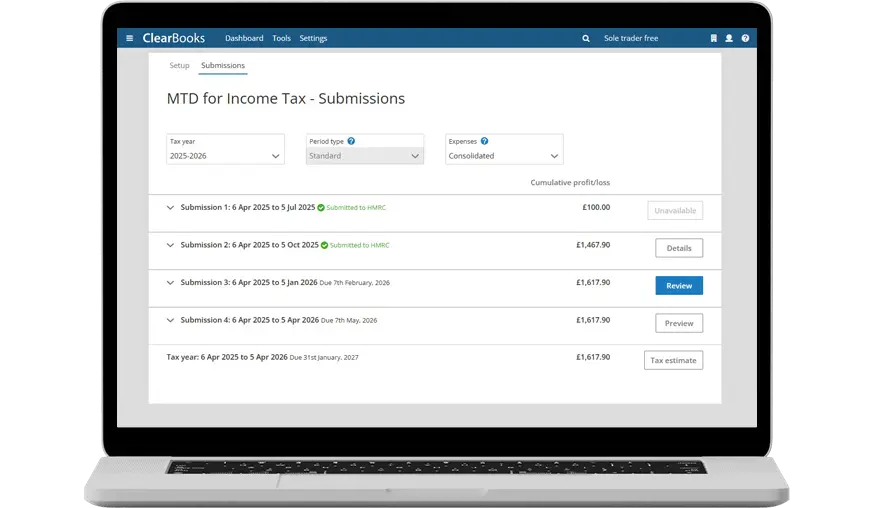
The Clear Books MTD for Income Tax submissions screen showing four quarterly updates submitted to HMRC
Q1 update submitted
HMRC recognised
Common questions

HVAC & air-con engineer MTD FAQ.

Do HVAC and air-con engineers have to use MTD for Income Tax?
Yes, if you're self-employed with gross income over £50,000, it applies from 6 April 2026. The threshold drops to £30,000 from April 2027 and £20,000 from April 2028.
Is my F-Gas certification a business expense?
Yes. F-Gas certification and assessment costs are business expenses you record digitally, alongside your insurance, tools and van costs.
How do recurring service contracts fit into quarterly reporting?
They're steady income you record as you invoice, usually B2B rather than cash, sitting alongside lumpier install income in the same quarterly update.
My work peaks in summer, does that matter?
No. Each quarterly update reflects that quarter, so a busy summer is higher than a quiet winter. Your final declaration reconciles the year and tax is based on annual profit.
What else can I claim?
Typical costs include refrigerant and parts, gauges and tools, your van and fuel, F-Gas and other certification, insurance and training.
Free for sole trader engineers

Keep contracts and installs in order.

Record service invoices and install materials as you go, and send your first quarterly update in minutes.