For self-employed electricians

MTD for Income Tax for electricians.

Van, tools, materials and a mix of domestic call-outs and contract work. Here's how Making Tax Digital for Income Tax applies to electricians, what records you need, and when it starts for you.

Does this apply to me?

If you turn over more than £50,000, it applies now.

MTD for Income Tax is measured on gross income, your total takings before any expenses. A well-booked domestic and contract round trips over £50,000 quickly.

Live now
£50,000
Gross income from April 2026
£30,000
Threshold from April 2027
£20,000
Threshold from April 2028
Gross, not profit

Materials pass through your takings too.

Because MTD tests gross income, the parts and materials you buy and recharge to customers count towards your total, even though they're not really your profit. That pushes a lot of electricians over the line sooner than they expect.

What records you need
What's changing

Digital records, four quarterly updates, one final declaration.

Your annual Self Assessment return is replaced. You'll keep digital records and send HMRC a short summary of income and expenses each quarter.

Expenses to keep digital

  • Van, fuel and running costs
  • Tools and test equipment
  • Materials and parts you buy in
  • Certification, registration and testing fees
  • Public liability insurance and workwear
  • Training and ongoing qualifications

Snap receipts on the app as you buy, so a wholesaler run doesn't become a paperwork job at the end of the quarter.

  • Domestic call-outs Lots of small jobs, quick to log on the app
  • Contract work Larger jobs, sometimes with CIS deductions
  • Materials markup Recharged parts recorded against each job
The electrician detail

The bits specific to your trade.

Domestic and contract mix

Dozens of small call-outs alongside the odd big contract. One tidy set of records covers both, and your quarterly update just totals it all.

Certification costs

Registration and testing fees are business expenses you can record. Keep them logged and your expense total stays complete.

Materials vs labour

Recharged parts flow through your takings. Recording materials separately keeps your figures clear and any CIS deductions accurate.

Some CIS work

Subcontracting on construction sites? CIS may come off your labour. It still counts towards your tax, recorded and reconciled through MTD.

Doing construction subcontract work too? See our MTD guide for CIS subcontractors.

Why Clear Books

Built for the van, not the office.

You're between jobs, not sat at a desk. Clear Books lets you keep records from your phone and gives HMRC exactly what they need, nothing you don't.
  • Record income and expenses on the app between jobs
  • Snap receipts for materials and tools on the spot
  • Keep certification and registration fees logged
  • CIS support built in for construction subcontract work
  • Send HMRC-compliant quarterly updates in minutes
  • Free plan available, no timer
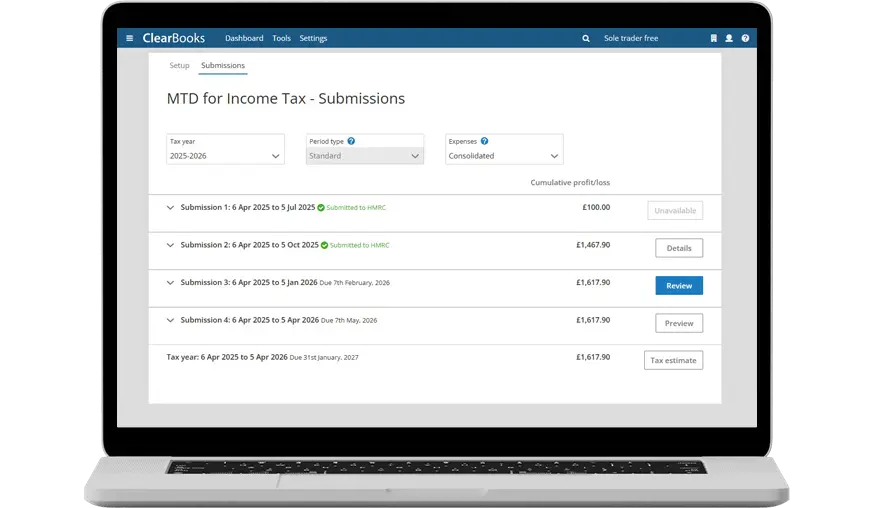
The Clear Books MTD for Income Tax submissions screen showing four quarterly updates submitted to HMRC
Receipt captured
HMRC recognised
Common questions

Electrician MTD FAQ.

Do electricians have to use MTD for Income Tax?
Yes, if you're a self-employed electrician with gross income over £50,000, it applies from 6 April 2026. The threshold drops to £30,000 from April 2027 and £20,000 from April 2028.
What expenses can I record?
Typical costs include your van and fuel, tools and test equipment, materials and parts, certification and registration fees, insurance, workwear and training. Record them digitally as you go and your quarterly and year-end figures stay accurate.
I do some CIS work, how does that fit?
If you subcontract on construction projects, CIS may be deducted from your labour before you're paid. That still counts towards your tax bill. Under MTD you record the gross income and the CIS deducted, then reconcile it in your final declaration.
How do certification and testing records work?
The registration and testing fees are business expenses you record digitally. The certificates themselves are job documentation, but keeping the fees logged keeps your expenses complete.
Do I report every job separately?
No. Your quarterly update is a summary of your total income and expenses for the period, whether that's domestic call-outs or contract work. Clear Books totals it up so you just review and submit.
Free for sole trader electricians

Keep your books straight from the van.

Log jobs and materials as you go, snap your receipts, and send your first quarterly update in minutes.