Landlords are named in the MTD legislation. If your gross property income is over £50,000, the rules apply to you from April 2026. Here's exactly what changes, and how to make it the easy part of your week.
This trips a lot of landlords up. HMRC looks at the total rent you collect before any expenses or mortgage interest come off.
If you rent out property and also do any self-employed work, HMRC combines the gross income from both to test the threshold. A £35,000 rental income plus £20,000 of freelance work puts you in scope now, even though neither reaches £50,000 on its own.
Your annual Self Assessment return is replaced. You'll keep digital records and send HMRC a short summary of rental income and expenses every quarter.
Late or missing quarterly updates can trigger HMRC's points-based penalties, so it pays to get set up before your first quarter starts.
Your UK residential lets are reported together as a single property business. Tag income and expenses by property so you can still see how each one performs.
Own a property with a spouse or partner? You each report your own share. Record your percentage so your quarterly figures are only ever your part.
Finance costs on residential lets aren't deducted in full. You record the interest digitally and the basic-rate tax reduction is applied at year-end.
Replacement of domestic items relief, wear on furnishings and different expense patterns all sit tidily against the right property in your records.
You don't want a monster accounting suite to log rent and a boiler repair. Clear Books gives landlords exactly what HMRC asks for, without the clutter.
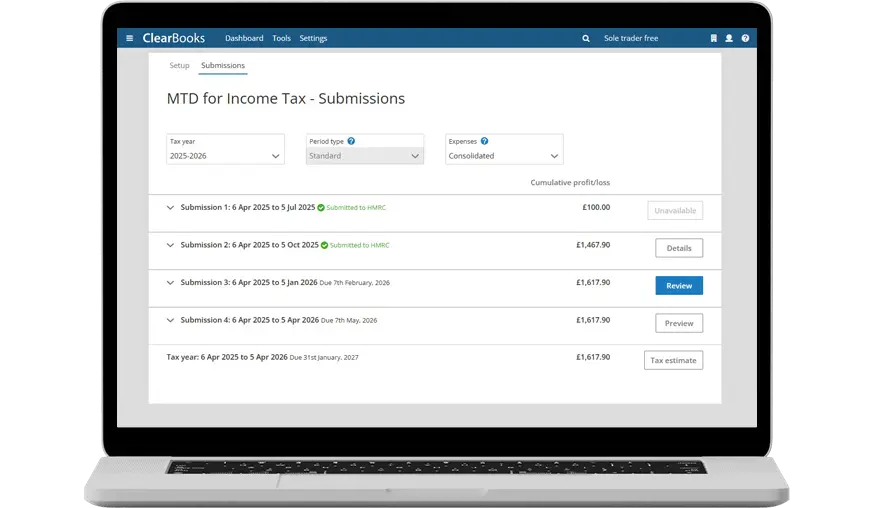
Add your properties, record the rent, send your first quarterly update. Most landlords are set up in under 15 minutes.
