Staying compliant as a sole trader just got harder, here's how to simplify it, without paying for software you don't need.
Managing tax by spreadsheet or paper was already painful. As HMRC tightens the rules, it stops being viable.
Late or missing quarterly submissions trigger HMRC's points-based penalty system, even on modest income.
Copy-pasting between spreadsheets is exactly how the wrong number ends up in HMRC's inbox.
Trying to reconstruct a year of records in January is no way to spend the start of the year.
Hours spent hunting receipts are hours you can't spend on paid work.
HMRC's rollout reaches hundreds of thousands of self-employed workers as the income threshold steps down, many of whom have never used accounting software before.
Three changes to be ready for: quarterly updates, digital record-keeping, and submitting through compatible software.
Even if your total income is low, late or missing submissions can trigger penalties, so it's worth getting set up early.
| Paper | Spreadsheets | Clear Books | |
|---|---|---|---|
| HMRC recognised for MTD | ✕ | ✕ | ✓ |
| Quarterly submissions in minutes | ✕ | ✕ | ✓ |
| Bank feeds & receipt capture | ✕ | ✕ | ✓ |
| Designed for sole traders | ✕ | ✕ | ✓ |
| Free plan available | ✕ | ✕ | ✓ |
On HMRC's official list of MTD-compatible software for Income Tax Self Assessment.
If you're not an accountant, the software shouldn't feel like one. Plain language, friendly defaults.
A genuinely free plan means a tight month never means a missed deadline.
Built around how you actually work, not a stripped-down version of enterprise accounting software.
You shouldn't need an accounting degree to file your own tax. Clear Books gives you everything HMRC requires, and not much more to get in your way.
Working in a specific trade? See MTD for Income Tax for your trade, with guides for construction, health, beauty and drivers.
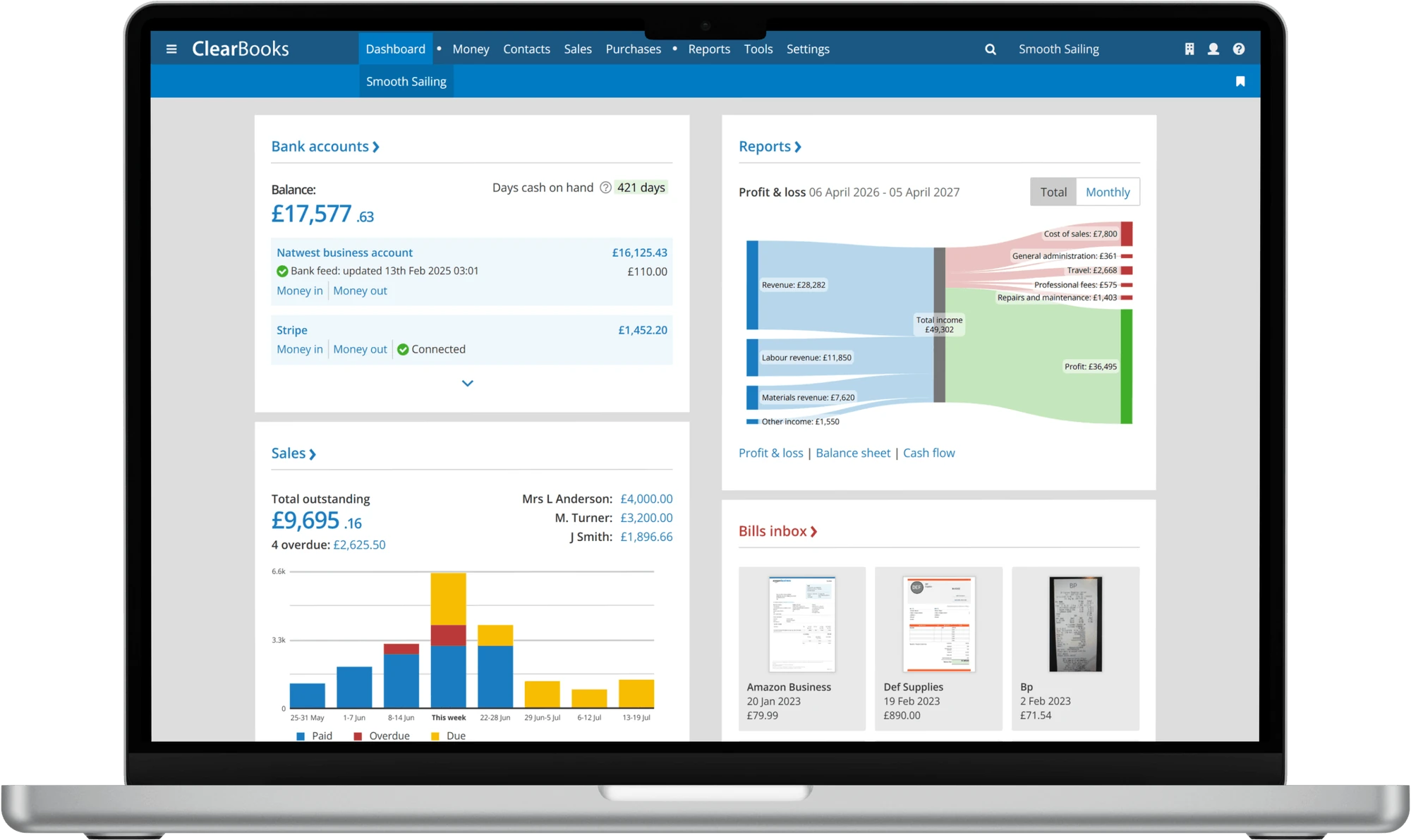
Sign up, add your income and expenses, send your first quarterly update. You're done. Kettle on.
